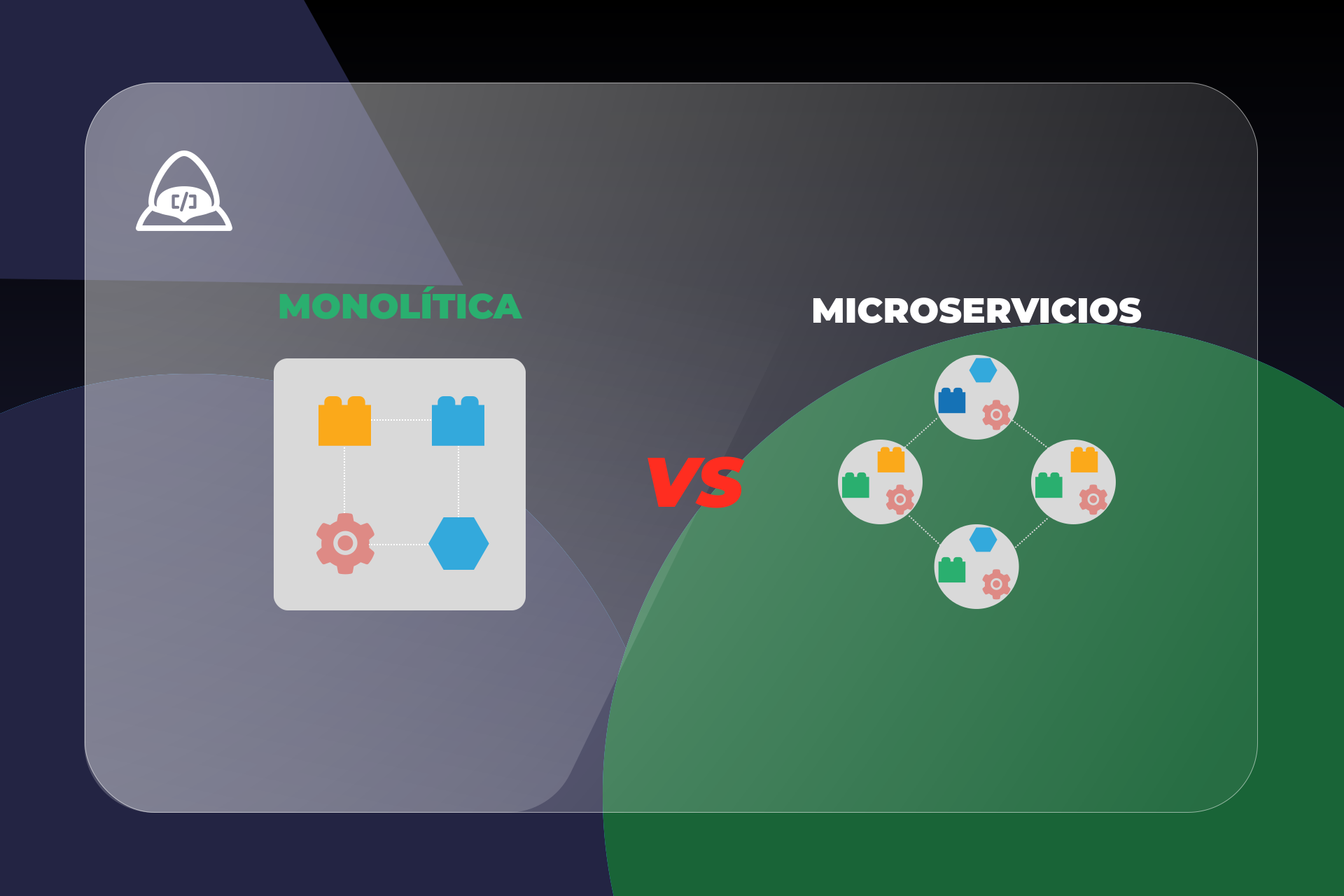
Today, two fascinating concepts that have transformed how applications are built are explored: monolithic architecture and microservices architecture. The goal is to simplify them and add a fun touch.
Monolithic Architecture: The Friendly Giant 😎
Imagine building a house. Monolithic architecture is like building one giant house, all in a single structure. What does this mean? All components of the application, from the database to the user interface, are packaged together as one big unit. As a result, if a change is needed in one part of the house, the whole house often needs to be rebuilt. It sounds scary, right?
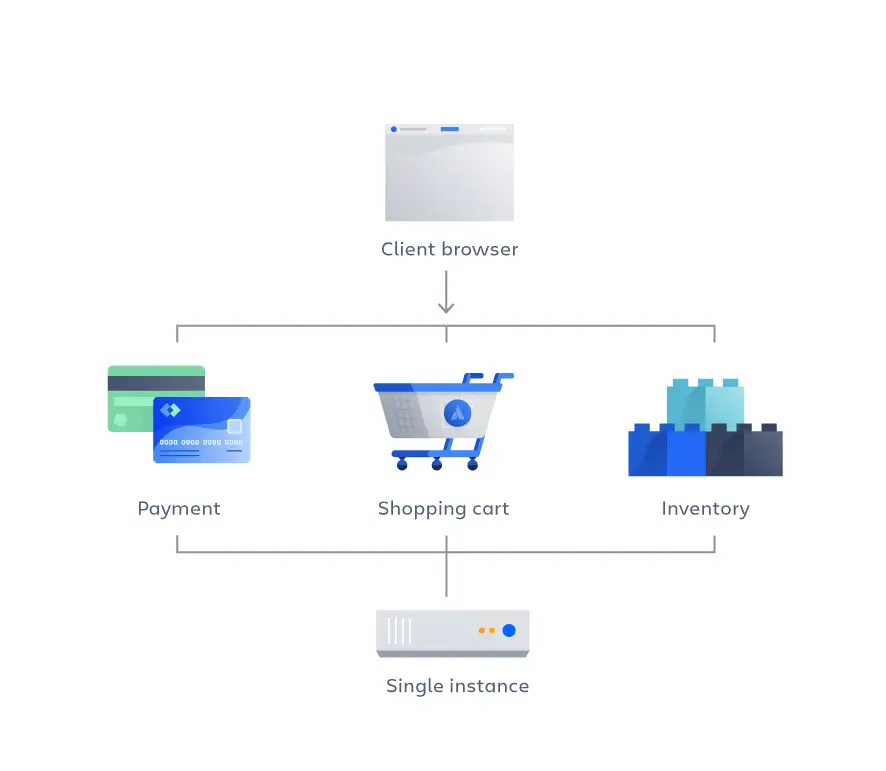
Advantages of Monolithic Architecture
Easy to understand: Its simplicity is the biggest advantage. For newcomers, it is an excellent starting point.
Low initial costs: Building a single structure is cheaper at first, like buying one big house instead of multiple apartments.
Simple debugging: Identifying and solving problems is relatively easier when everything is in one place.
But there is a catch... 😢
Hard to scale: When the monolithic house grows and needs more space, expanding it can be a headache. It is like trying to expand a giant house without tearing it down.
Complicated deployments: Updating a small part of the house without affecting the rest can be a real challenge.
Microservices Architecture: The Happy Neighborhood 😂
Now, a different scenario: instead of one giant house, imagine a neighborhood with many small houses. Each house is an independent "microservice" with its own function and personality. A house can be added, remodeled, or even demolished without affecting the others. Great, right?

Advantages of Microservices Architecture
Simple scalability: If more space is needed, just build more houses. It is a neighborhood that grows smoothly.
Flexible deployment: Each house can be updated separately, without the rest of the neighborhood noticing.
Fault tolerance: If one house has problems, the others keep running as if nothing happened.
But... 😢
More initial complexity: Just like maintaining a neighborhood requires more organization than a single house, working with microservices can be more complex.
Higher initial cost: Building many houses can be more expensive at the start, but in the long run the benefits far outweigh the costs.
Conclusion
As shown, monolithic architecture is like living in a giant house, while microservices architecture is like managing a neighborhood. Both have advantages and disadvantages, and the choice depends on needs and preferences.
So which is the best option? There is no definitive answer. It depends on the project and its objectives. Sometimes a giant house is perfect, and other times a microservices neighborhood is the right choice. The important part is understanding both options and knowing when to use each one.